Growing culinary herbs at home gives you fresh leaves for everyday cooking right outside your kitchen door. Whether you want to snip basil for fresh pesto, simmer rosemary in a hearty stew, or toss fresh parsley over roasted vegetables, gathering reliable herb growing information is the first step toward a bountiful harvest. Many kitchen garden favorites are remarkably easy to grow and ask for very little space to grow. This practical herb growing guide walks you through the fundamentals so you can cultivate thriving plants in a dedicated herb garden bed, an elevated raised bed, or container herbs placed along a sunny windowsill.
Starting an herb garden transforms weeknight dinners while enhancing your home landscape with fragrant foliage. For any home gardener, understanding the basic growing conditions that different herb varieties prefer saves time and prevents common pitfalls. When you are laying the groundwork for how to grow an herb garden, matching each herb to the right soil, light, and container helps ensure strong root establishment and steady vitality throughout the growing season.
Understanding Plant Life Cycles: Annual, Two-Year, and Perennial Herb Varieties
Before you sow seeds or purchase nursery stock at a local garden center, it helps to understand plant life cycles. Knowing whether an individual herb lives for a single summer or returns year after year shapes your garden layout, watering routine, and seasonal care.
- Annual herbs: Plants such as sweet basil, summer savory, and dill complete their entire life cycle in a single season. They grow rapidly from seed, produce abundant leaves, set seed, and die back with the first autumn frost.
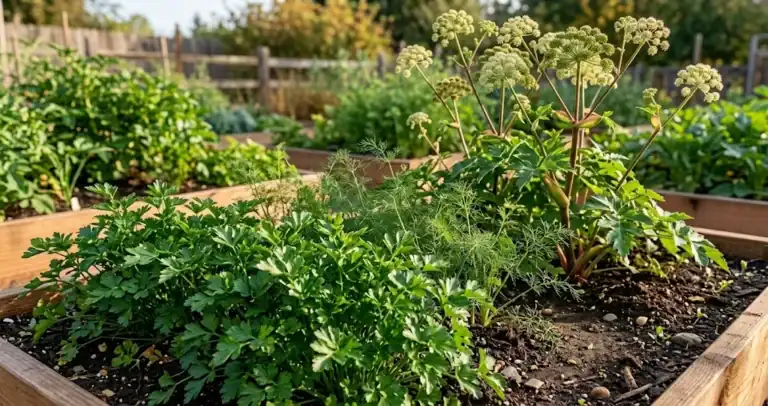
- Two-year life cycles: A biennial crop like parsley or caraway produces lush foliage in its first season, overwinters in dormancy, and produces a flowering stalk and seeds in its second spring before finishing its life cycle.
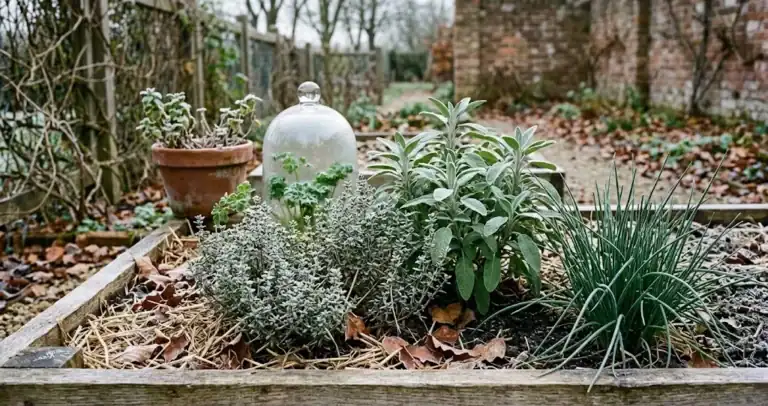
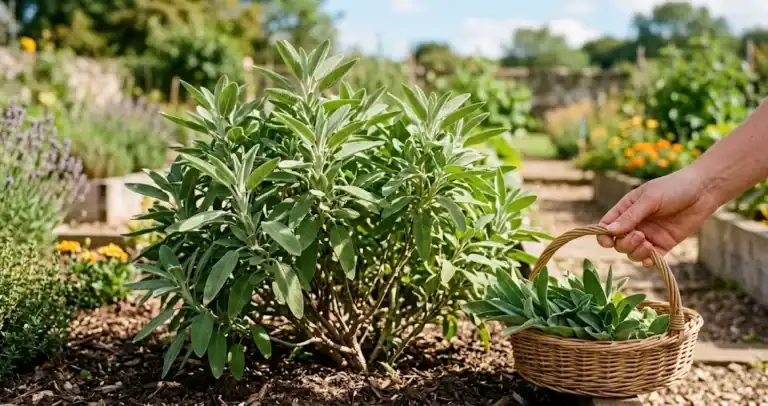
- Perennial herbs: Woody and herbaceous perennials return for many years. Hardy perennial varieties like winter thyme, garden sage (Salvia officinalis), oregano, and chives are hardy in zones 5 through 9, while French tarragon is an herbaceous perennial that dies back to the ground in cold winters and resprouts from the roots each spring. In contrast, a tender perennial or small shrub such as rosemary or sweet bay leaf survives mild winters outdoors but requires frost protection or indoor sheltering in cold northern regions.
When selecting cultivars for your yard, consulting regional extension bulletins or specialized reference books about growing herbs will help you identify which varieties produce the best flavor in your local climate.
Essential Growing Conditions for a Successful Herb Garden
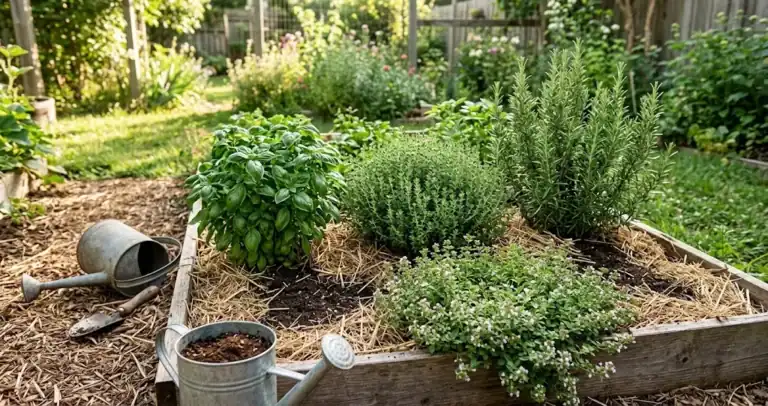
Many herbs originated in Mediterranean climates, meaning they thrive with moderate moisture, abundant sunlight, and lean, well-drained soil. Providing these basic environmental conditions will help you grow herbs with intense aroma and healthy leafy growth.
Sunlight and Location Requirements
Most kitchen herbs need at least six hours of sun each day to synthesize the volatile oils responsible for their pungent flavor. Position your garden plot in full sun, away from dense tree canopies or building shadows. If your yard has areas with filtered light, shade-tolerant herbs like mint (Mentha), chives, and cilantro (coriander leaf) will tolerate partial shade without difficulty.
Soil Structure and Proper Drainage
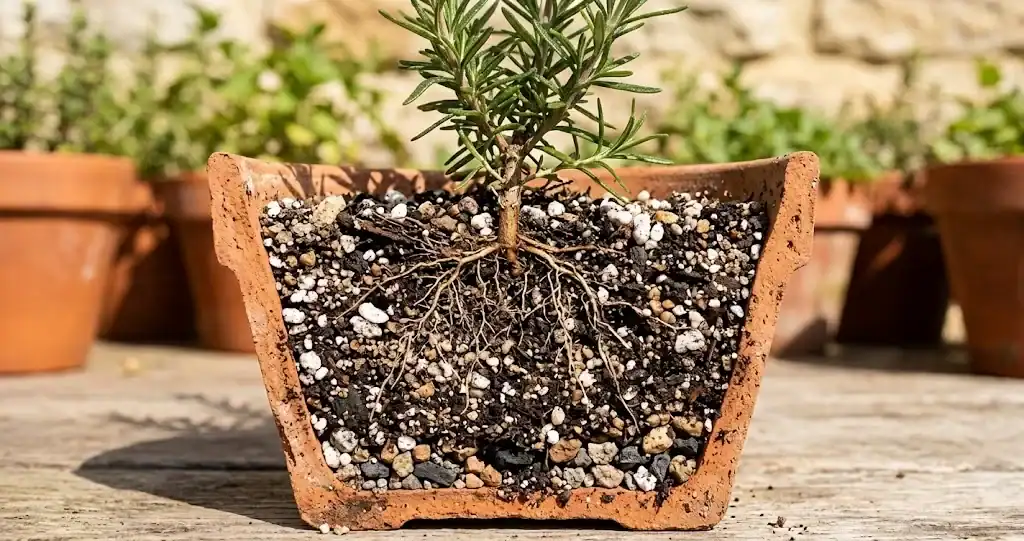
Herbs dislike standing water around their root systems. Good soil with sharp drainage is vital, as waterlogged ground causes root rot and poor vitality. While herbs adapt to a variety of soil types, heavy clay benefits from amendments like coarse grit, perlite, and modest compost. A quick soil test helps ensure a balanced pH between 6.0 and 7.0. Avoid heavy applications of commercial fertilizer, because excessive nitrogen forces weak, watery leaf growth that dilutes natural essential oils.
To plan an efficient layout and pair complementary species, our comprehensive guide on discovering what sets each herb apart details the distinct growth habits, watering needs, and culinary profiles across common kitchen favorites.
Starting Herbs: Herb Seeds, Seedling Transplants, and Cutting Propagation
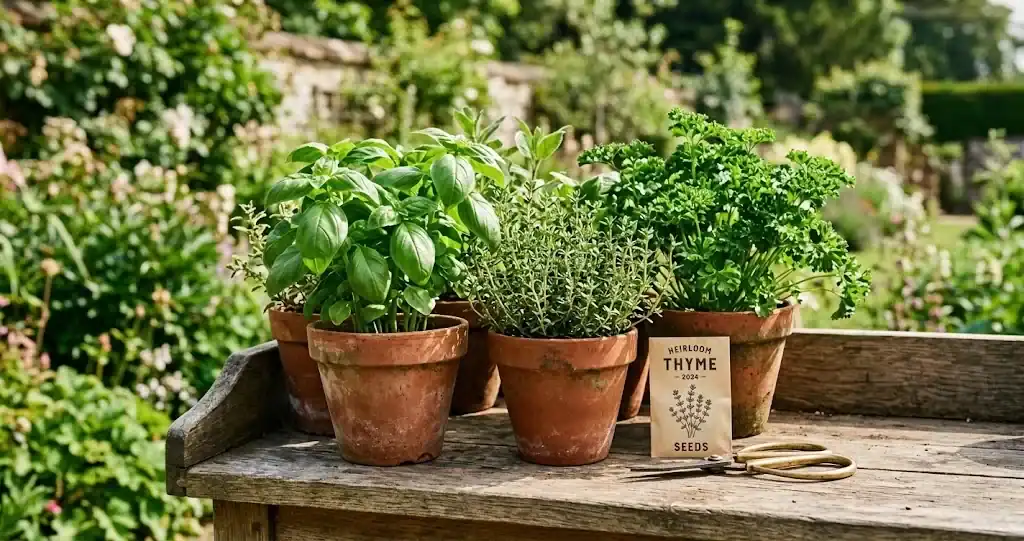
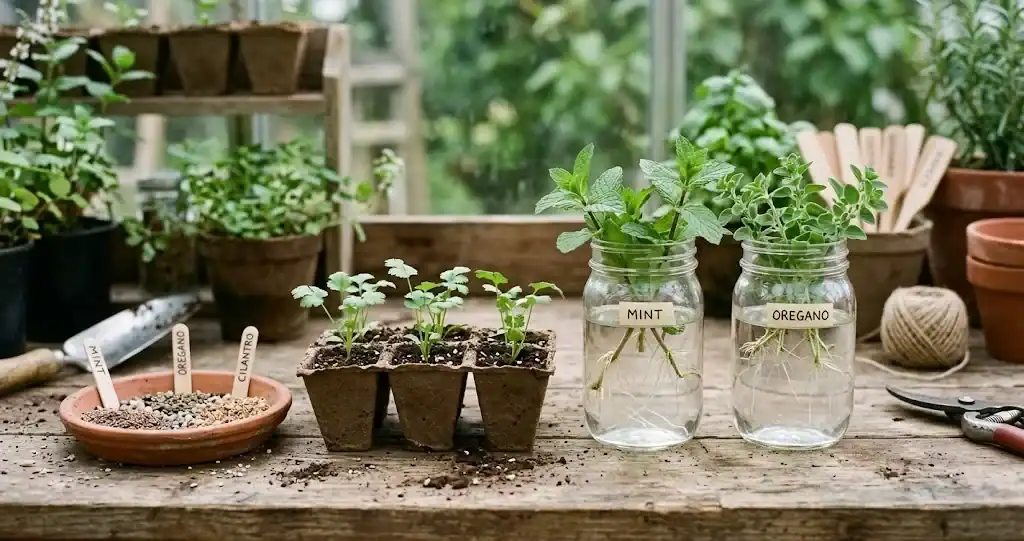
You can establish herb plants through three primary propagation methods: direct sowing, nursery transplants, or vegetative cuttings. Each technique offers distinct advantages depending on the species.
- Direct Sowing Outdoors: Taproot crops such as cilantro and dill resent root disturbance and establish best when you sow seeds directly into warm garden soil after all danger of the last frost has passed.
- Starting Seeds Indoors: Slow-germinating varieties can be started indoors six to eight weeks before your average spring frost date under an adjustable grow light using a sterile seed-starting potting mix.
- Nursery Seedlings: Purchasing an established seedling from a garden center lets you start slow-growing perennials like sage and lavender without waiting months for seeds to mature.
- Stem Cuttings: Taking a softwood cutting from healthy stem tips in late spring is a fast way to propagate favorite varieties of mint and oregano. Make a clean cut, cut the stems just below a node, and place them in clean water or moist rooting potting soil until roots form.
Growing Herbs Indoors and in Containers
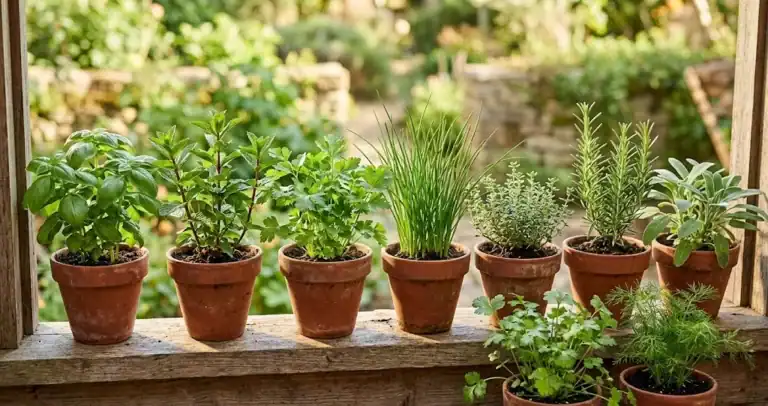
If outdoor yard space is limited, indoor gardening on a windowsill or cultivating container herbs on a balcony provides an easy, productive solution. Annual and perennial herbs grown in containers give you complete control over soil moisture and sunlight exposure.
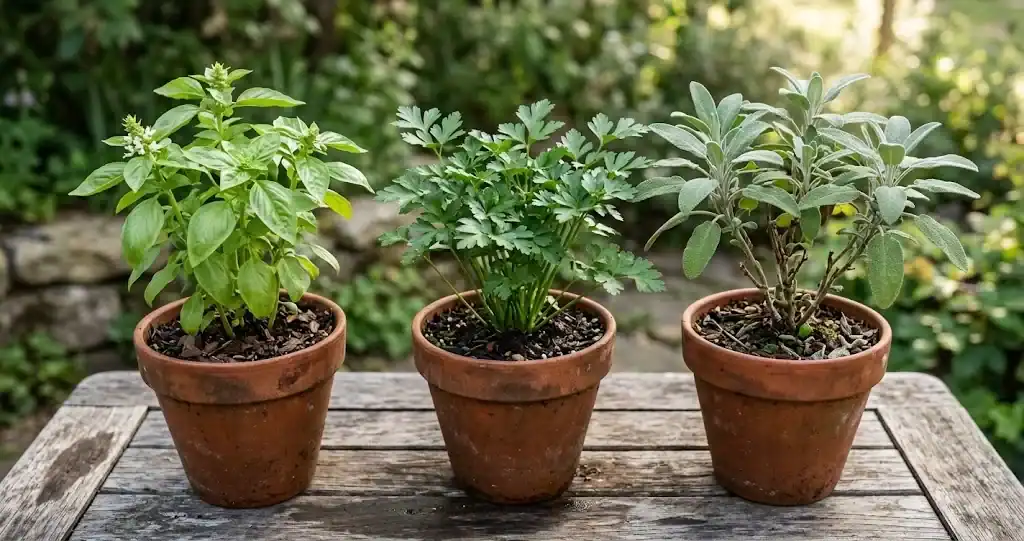
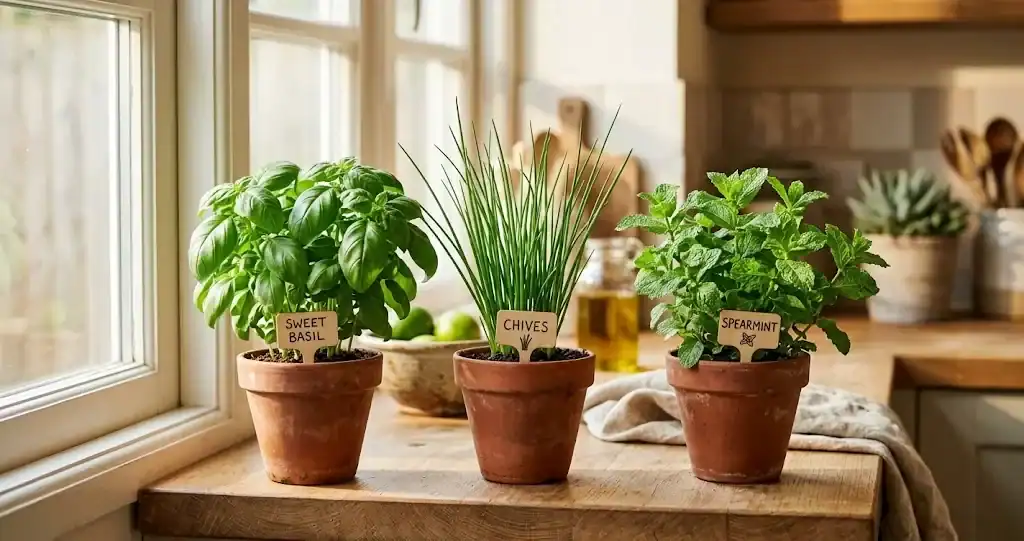
Choose pots with generous bottom holes for moisture runoff. Porous terracotta pots are especially beneficial because their breathable clay walls allow excess water to evaporate naturally. Fill each pot with a lightweight potting mix formulated for containers rather than dense topsoil. Group plants with similar water requirements together: place drought-tolerant perennials in one planter, and keep moisture-loving herbs such as basil in a separate pot. Set indoor containers on a bright south-facing windowsill, supplementing with artificial lighting during short winter days.
Harvesting, Pruning, and Preserving Culinary Herbs
When you harvest herbs regularly, routine clipping encourages dense branching and prevents your plants from becoming woody or bolting. Follow these practical harvesting principles to keep your plants productive:
- Morning Picking: Snip stems in the cool morning after dew has dried but before the midday sun warms the leaf canopy, when volatile oils reach peak concentration.
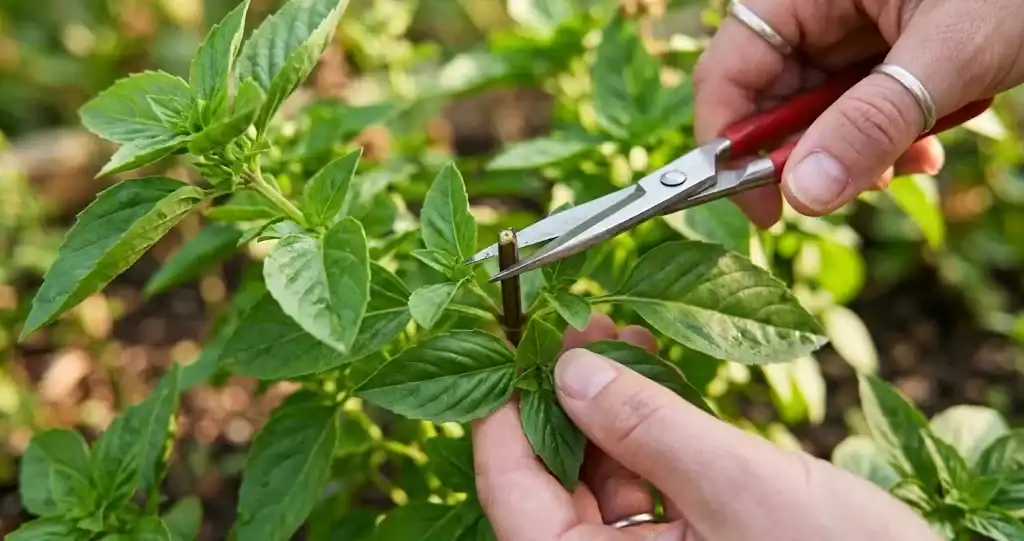
- Pruning Technique: Snip the top third of each stem just above a pair of healthy leaves using clean garden shears, never stripping more than one-third of the total leafy growth at once.
- Managing Bloom: Pinch off developing flower buds promptly so each herb directs its energy toward leaf production rather than letting flowers go to seed.
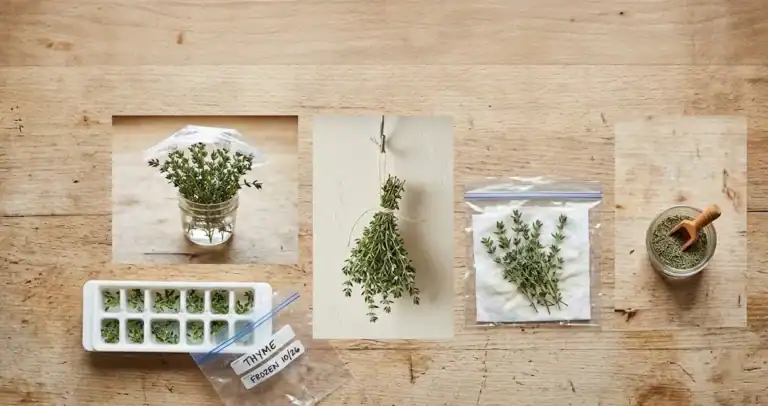
- Drying and Storage: To dry herbs, hang small bundles upside down in a warm, dark, well-ventilated space. Once the leaves are completely brittle, crumble them into clean glass jars stored in airtight containers away from heat and light. Tender greens can also be frozen in olive oil trays or blended into savory sauces for convenient winter seasoning.
Pest Prevention and General Plant Health
Healthy herbs suffer remarkably few pests and diseases when provided with adequate airflow and proper light. Inspect new growth occasionally for common aphids or spider mites. A gentle rinse from a garden hose or a light spray of insecticidal soap easily manages minor problems. Allowing a few perennial herbs to flower at the end of the season attracts beneficial pollinator insects and predatory wasps that support your wider vegetable garden.
Reliable Herb Growing Resources and Citations
For gardeners seeking research-backed horticultural standards, university extension services and national plant societies offer authoritative reference material:
- UConn Home & Garden Extension: A Guide to Growing Herbs provides regional planting calendars, soil recommendations, and winter protection strategies for home growers.
- The Herb Society of America: Herb Gardening Basics details comprehensive botanical characteristics, site preparation advice, and historical cultivation methods for culinary and ornamental herbs.